
The Sheep
Classing for wool is when a classer (the person judging the sheep and deciding if it should stay or go) puts the classing emphasis on the wool the sheep is growing. Wool quality is one of the most consistent traits inherited by lambs and therefore, classing sheep for the type of wool the farming operation is aiming for is important. Sheep are classed based on the type of wool the farm business is wanting to produce.
Classing The Sheep

For wool
wool vs conformation
For conformation
Classing for conformation is the classer looking at all parts of the sheep. They will look at their head, teeth, length of neck, body length and depth (how long and tall the body is), feet (pasterns and hocks – check below for more specific information) as well as the wool on its back. Generally, the classer and farmer have an emphasis on the structural soundness of an animal to ensure productivity.

Teeth scoring
A sheep's teeth only grow on the bottom jaw. They should grow straight to meet the top gum to allow them to graze effectively.
The way a sheep's teeth grow is a heriditable trait and it can also be impacted by the environment and a sheep's age. Therefore, classing of sheep based on their teeth structure is important to ensure to the sheep to graze and grow properly. A scale noting whether the teeth are overshot (teeth too far forward) to undershot (teeth too far back) is used when classing.

Overshot

Correct

Undershot
Hock scoring
The angle of the sheep’s back legs imact the way a sheep can effectively walk. If they’re too straight or too bent towards each other a sheep cannot easily walk around a paddock but it can also impact a ewe's ease of lambing with the way the legs hips and legs have grown to allow walking.
The shape of a sheep's hock is a heritable trait and can be impacted by the environment and is therefore classed when sheep are assessed for conformation. The scale rates hocks from 1 to 5 with 1 or 2 being the ideal shape.

Score 1

Score 3

score 5
Pastern/toe scoring
A sheep's feet are important as they impact the way in which a sheep is mobile. The shape and way in which a sheep's feet develop can be both hereditable and cahnce over time depending on environment.
The pastern is the connection from the sheep’s feet/hooves to their leg - similar to a human ankle. A pastern should hold the foot in the correct position and is score on a scale of 1 (good) to 5 (bad)
A sheep's toes grow much like human finger and toe nails. Correctly shaped feet will wear the hooves evently. However, hereditary trails and the environment can change the shape of feet and impact a sheep's mobility.


Score 1 Pastern
Score 5 pastern

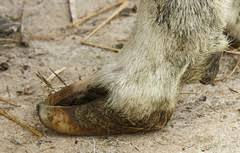
Score 5 - Overgrown
Body condition scoring
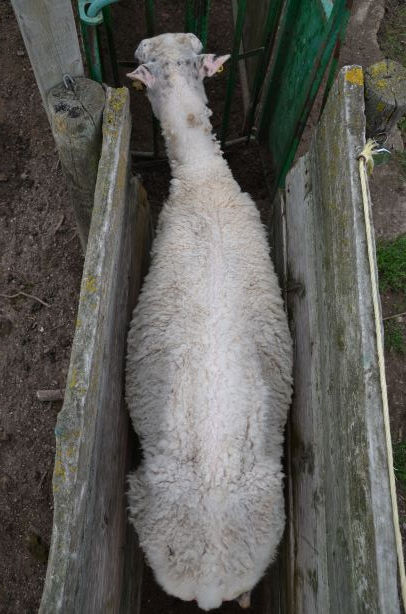


Scale from a very underweight sheep to an overweight sheep. What are the general goals for different periods (such as lambing, day-to-day functioning)
The general goal for ewe or wether that is simply doing nothing else other than eating and growing wool, is a body condition score of 3. For ewes coming in to lambing, around 4 and for lambs at foot around 2.5 to 3
score 1

score 3 - ideal for everyday
score 4 - ideal coming in to lambing

condition score scale
score 5 - overweight
glossary
Lamb – A young/baby sheep
Hogget – A teenage sheep that has not yet had its first lamb (if a ewe)
Maiden – A female sheep having its first lamb
Ewe – A female sheep that has had a lamb
Wether - A male sheep that has been castrated
Ram – A male sheep that is still has testicals
Classer – Someone that judges and makes decisions on the sheep
Length – How long the sheep is from the chest to tail
Depth – The height of the sheep from its stomach to its back
Overshot – Teeth too far forward
Undershot – Teeth too far back
Hocks – The sheep’s back legs
Pastons – The joint between the sheep’s legs and foot/hoof
Condition – The general weight and health of the sheep